Infectious

typhoid

Typhoid fever is a systemic infection caused by Salmonella enterica serovar Typhi, transmitted through the fecal-oral route in areas with poor sanitation, and characterized by a distinctive clinical progression from step-ladder fever and relative bradycardia in week one to bacteremia with rose spots in week two, potentially culminating in life-threatening complications such as intestinal perforation and hemorrhage by week three. This condition remains critically important for medical students because it exemplifies the interplay between pathogen virulence factors and host immune responses, demonstrates the diagnostic value of understanding disease staging when selecting appropriate cultures, and highlights the growing global threat of antimicrobial resistance with the emergence of extensively drug-resistant strains that require careful antibiotic stewardship and culture-guided therapy.

Free forever

The summary, the quiz, and the download stay accessible without forcing a sign-in flow. Donations only support the mission.
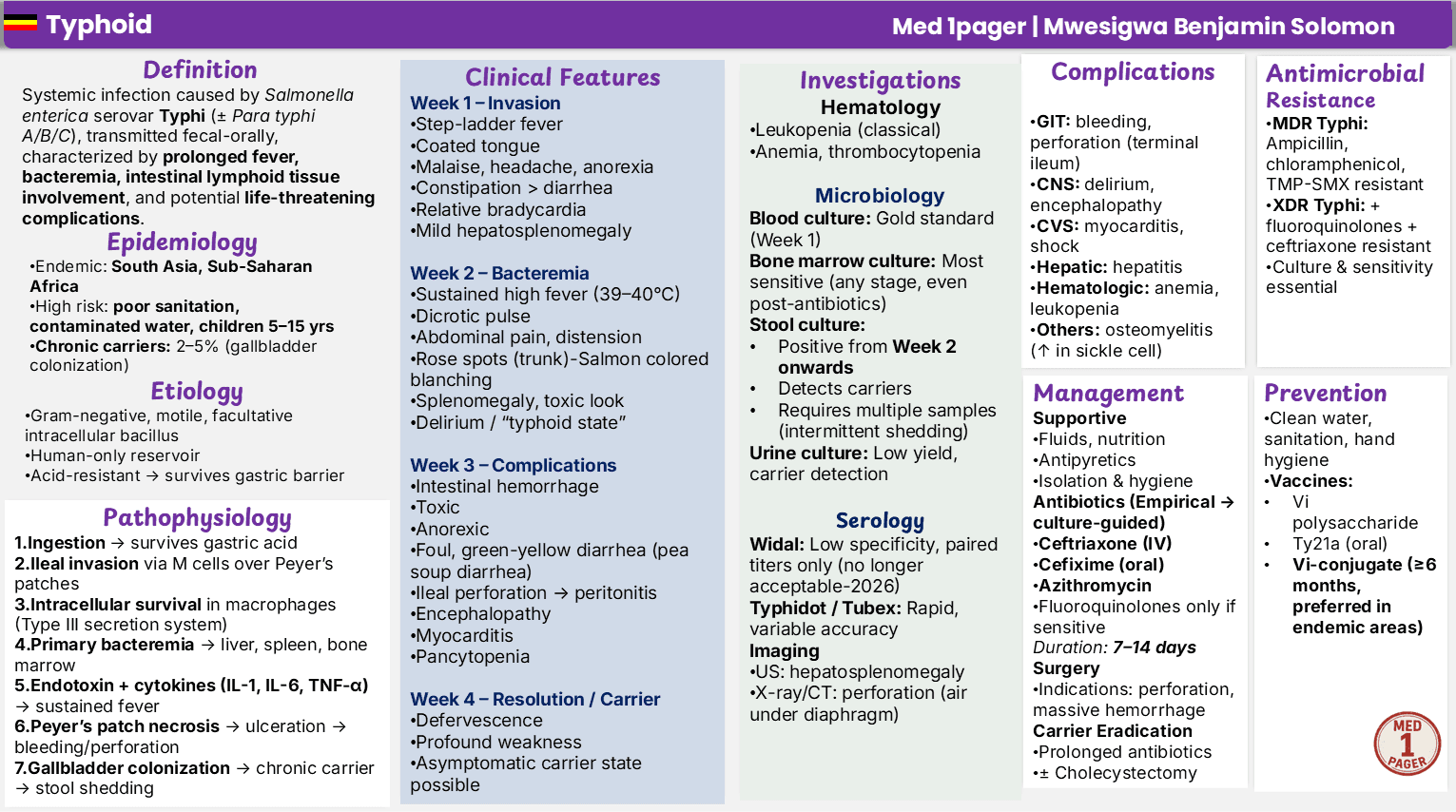
typhoid one-page medical summary

Right-click or long-press to save the image directly.

Quiz mode

Test your knowledge

Answer the visible questions first, then score yourself before revealing more.

1. What is the causative organism of typhoid fever?

2. Which regions are endemic for typhoid fever?

3. What percentage of typhoid patients become chronic carriers?

4. Which characteristic fever pattern is seen in Week 1 of typhoid infection?

5. What is the gold standard investigation for diagnosing typhoid fever?

Answer all 5 visible questions to submit.

Subscribe free