
Internal MedicinePediatricsInfectious

HIV associated illnesses

HIV-associated illnesses and opportunistic infections represent a spectrum of conditions that emerge as the immune system becomes progressively compromised, with specific infections and malignancies occurring at predictable CD4 count thresholds, making this knowledge essential for risk stratification and prophylaxis decisions. The clinical significance lies in recognizing that different organ systems are affected in characteristic ways, from gastrointestinal manifestations like cryptosporidiosis and CMV colitis to central nervous system complications such as toxoplasmosis and progressive multifocal leukoencephalopathy, each requiring specific diagnostic approaches and targeted treatments. Medical students must understand these CD4-correlated patterns because early recognition and appropriate prophylaxis can prevent life-threatening infections, while initiation of antiretroviral therapy remains the cornerstone of immune reconstitution and long-term disease management.

Free forever

The summary, the quiz, and the download stay accessible without forcing a sign-in flow. Donations only support the mission.
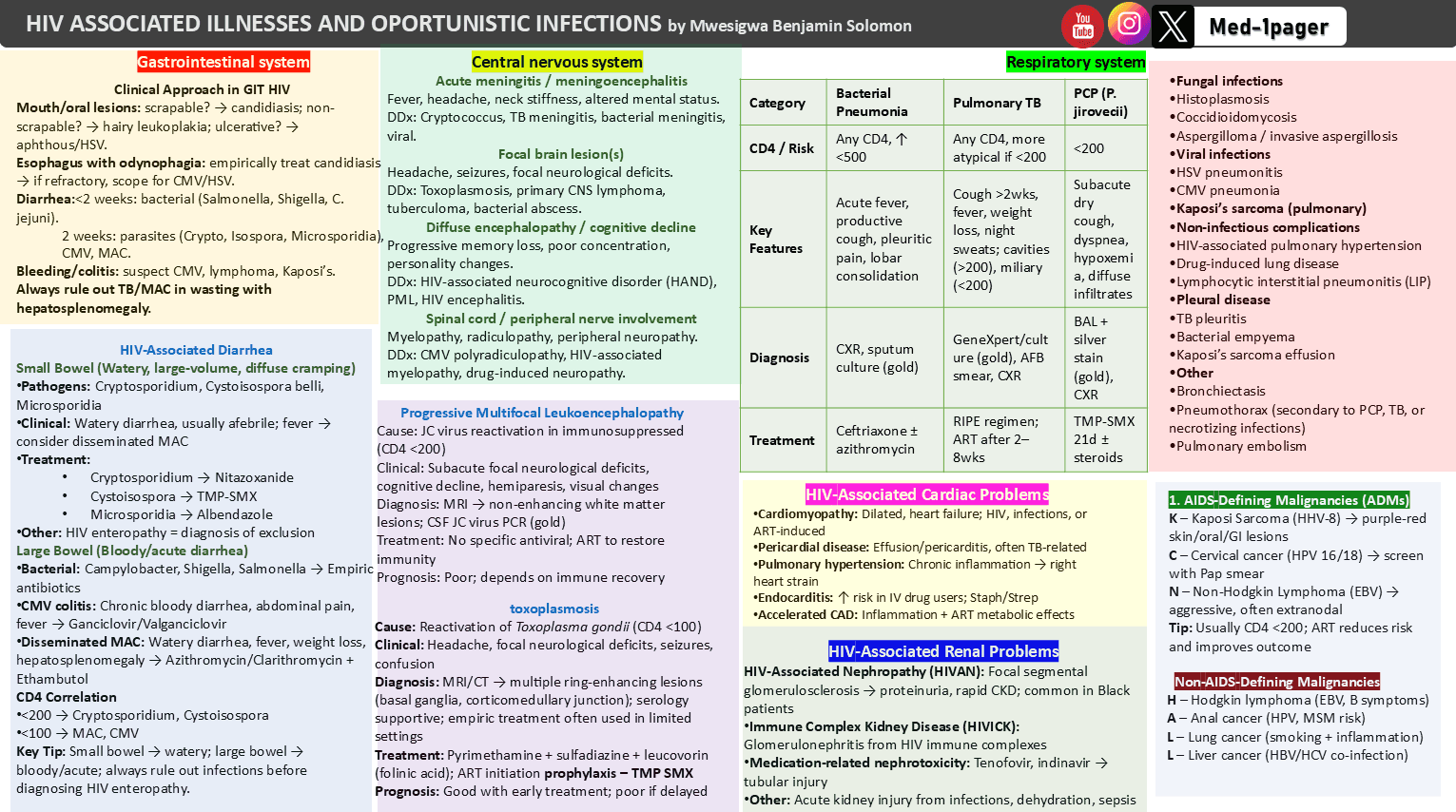
HIV associated illnesses one-page medical summary

Right-click or long-press to save the image directly.

Quiz mode

Test your knowledge

Answer the visible questions first, then score yourself before revealing more.

1. What is the CD4 count threshold typically associated with Pneumocystis jirovecii pneumonia (PCP)?

2. Which pathogen causes Progressive Multifocal Leukoencephalopathy (PML)?

3. What is the first-line treatment for Cryptosporidium-associated diarrhea in HIV patients?

4. Which diagnostic test is considered gold standard for diagnosing PCP?

5. What are the AIDS-defining malignancies represented by the mnemonic 'KCN'?

Answer all 5 visible questions to submit.
Subscribe free