
Transient Tachypnea of the newborn
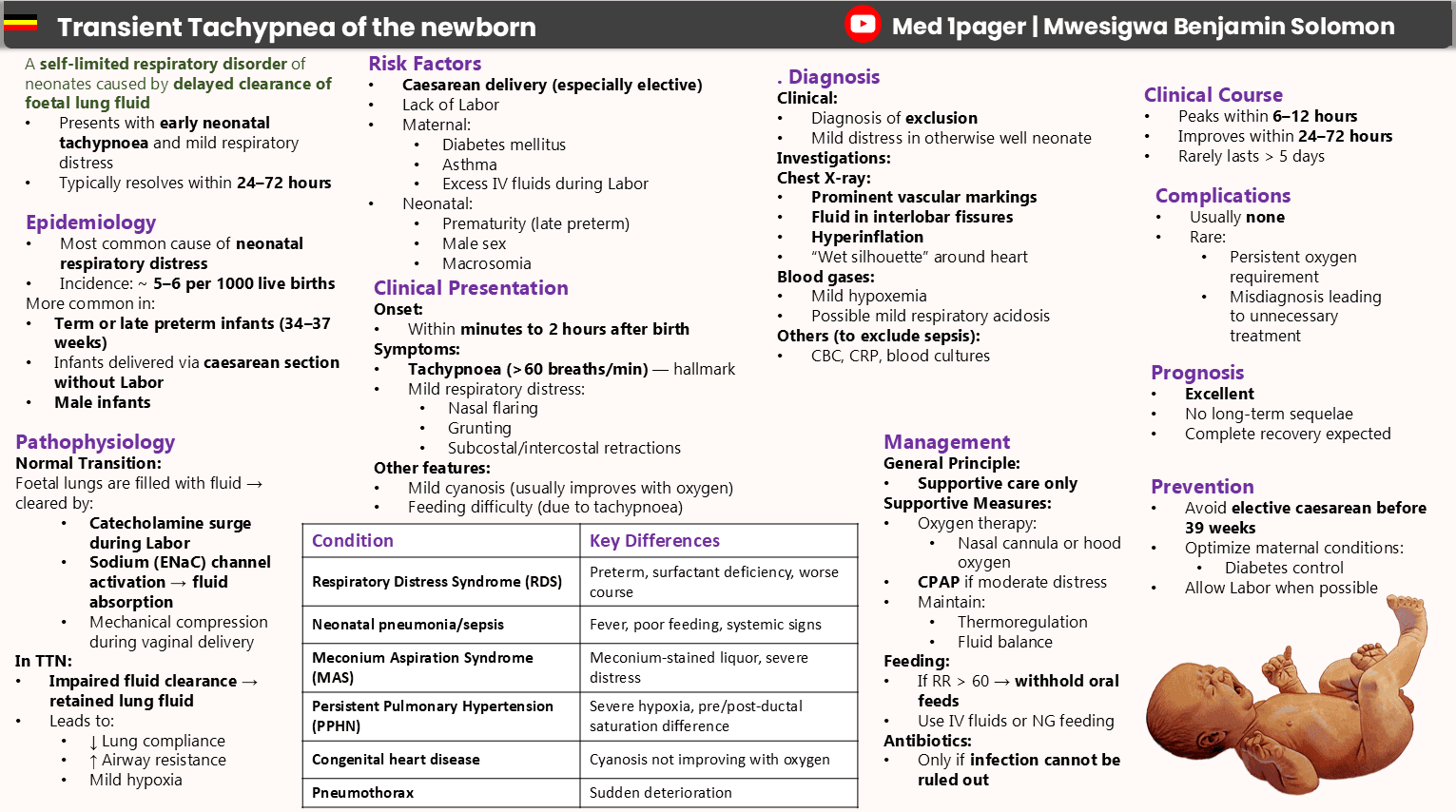
Transient Tachypnea of the Newborn is a benign, self-limited respiratory disorder caused by delayed clearance and absorption of fetal alveolar lung...
Pinch or double-tap to zoom. Drag to pan when zoomed in. Keyboard: + / − to zoom, arrow keys to pan, 0 to fit.
Free to download for personal study. You can also save the image directly.
Read topic overview
Transient Tachypnea of the Newborn is a benign, self-limited respiratory disorder caused by delayed clearance and absorption of fetal alveolar lung fluid, representing the most common cause of neonatal respiratory distress. It classically affects term or late-preterm infants delivered via elective cesarean section without labor and presents within minutes to two hours of birth with prominent tachypnea (above 60 breaths per minute) and mild work of breathing that resolves within 24 to 72 hours. Recognizing its characteristic chest X-ray findings, supportive management principles, and differentiation from life-threatening mimics like neonatal sepsis or respiratory distress syndrome is essential for medical students and clinicians.
Clinical Self-Assessment
Test your understanding
Select an answer on any question to immediately see if you are right and read the clinical explanation.
Showing 5 of 20 questions (0 answered).