
Respiratory distress syndrome
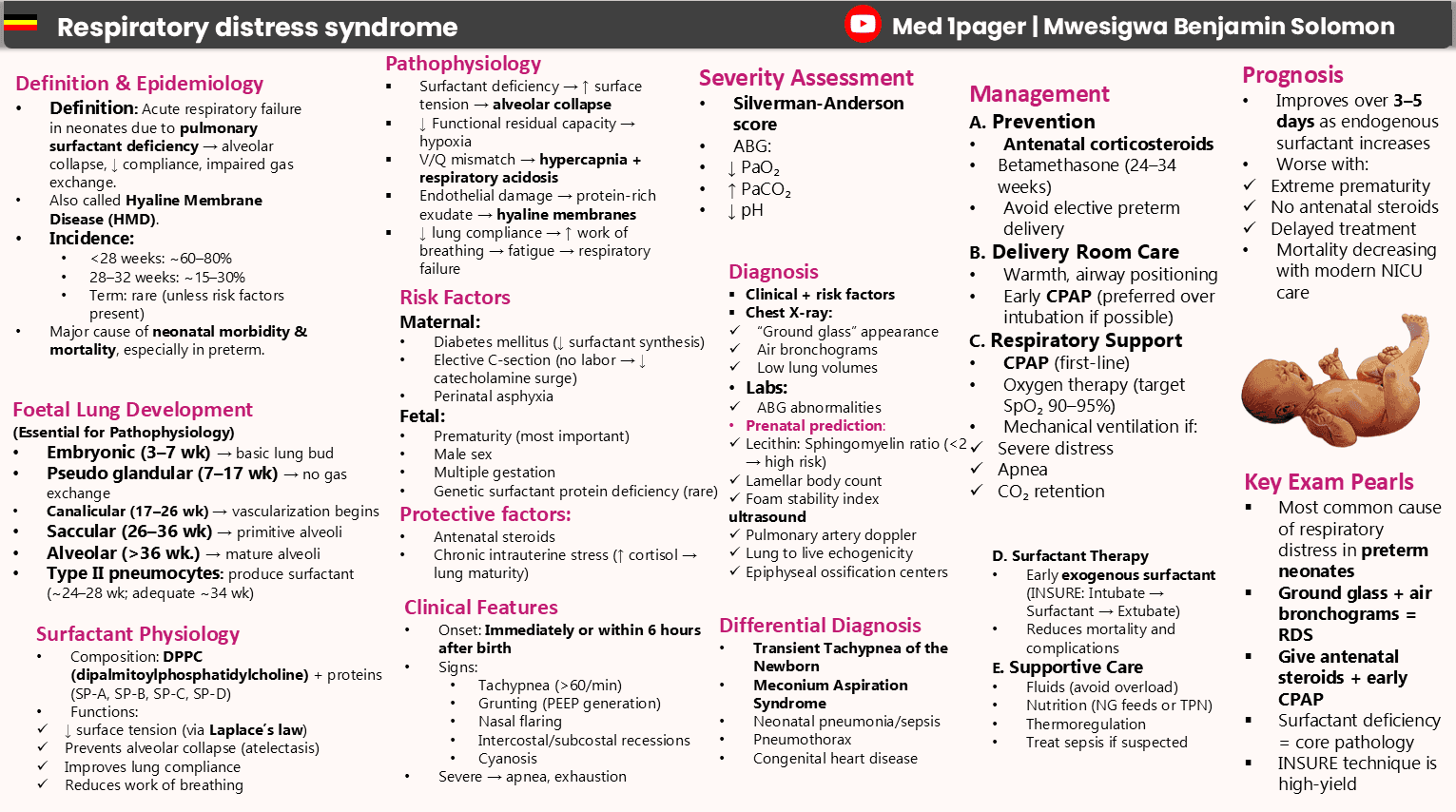
Neonatal respiratory distress syndrome, also known as hyaline membrane disease, is an acute respiratory failure in preterm newborns caused by pulmonary...
Pinch or double-tap to zoom. Drag to pan when zoomed in. Keyboard: + / − to zoom, arrow keys to pan, 0 to fit.
Free to download for personal study. You can also save the image directly.
Read topic overview
Neonatal respiratory distress syndrome, also known as hyaline membrane disease, is an acute respiratory failure in preterm newborns caused by pulmonary surfactant deficiency and structural lung immaturity. High alveolar surface tension leads to progressive alveolar collapse, decreased lung compliance, impaired gas exchange, hypoxemia, and respiratory acidosis within the first hours of life. Understanding fetal lung development stages, antenatal corticosteroid prevention, early continuous positive airway pressure, and exogenous surfactant administration is fundamental for pediatrics and neonatology examinations.
Clinical Self-Assessment
Test your understanding
Select an answer on any question to immediately see if you are right and read the clinical explanation.
Showing 5 of 20 questions (0 answered).