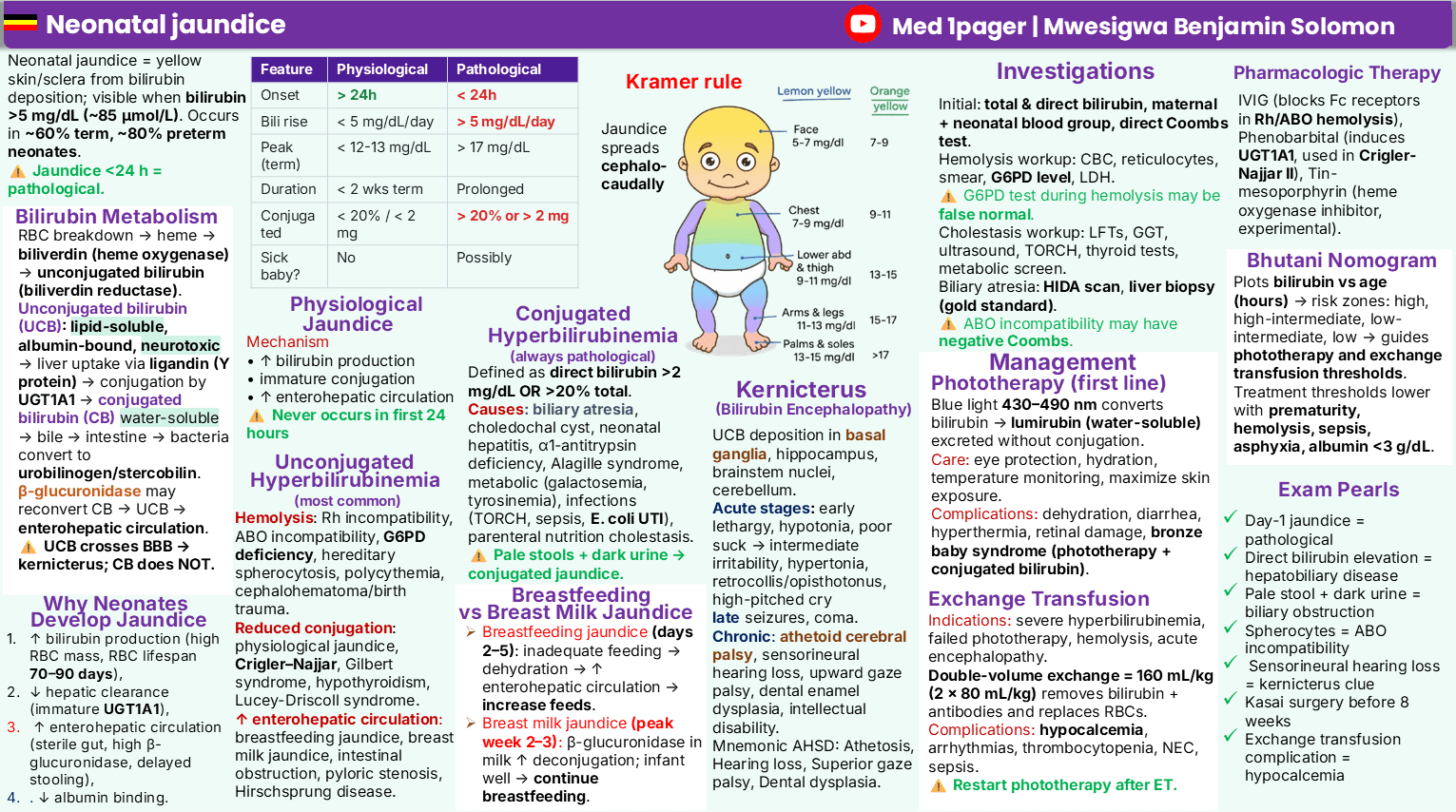
Neonatal jaundice is the yellow discoloration of skin and sclera caused by bilirubin deposition, occurring in approximately 60% of term and 80% of preterm newborns when bilirubin exceeds 5 mg/dL, with the critical distinction being that jaundice appearing within the first 24 hours of life is always pathological and requires urgent investigation. The condition matters clinically because unconjugated bilirubin is lipid-soluble and neurotoxic, capable of crossing the blood-brain barrier to cause kernicterus—irreversible bilirubin encephalopathy affecting the basal ganglia, hippocampus, and brainstem that manifests as athetoid cerebral palsy, sensorineural hearing loss, and developmental disability. Medical students must understand the Bhutani nomogram for risk stratification, recognize that conjugated hyperbilirubinemia with pale stools and dark urine indicates hepatobiliary pathology requiring workup for biliary atresia, and know that phototherapy converts bilirubin to water-soluble lumirubin while exchange transfusion is reserved for severe cases or failed phototherapy.