
Necrotizing Enterocolitis
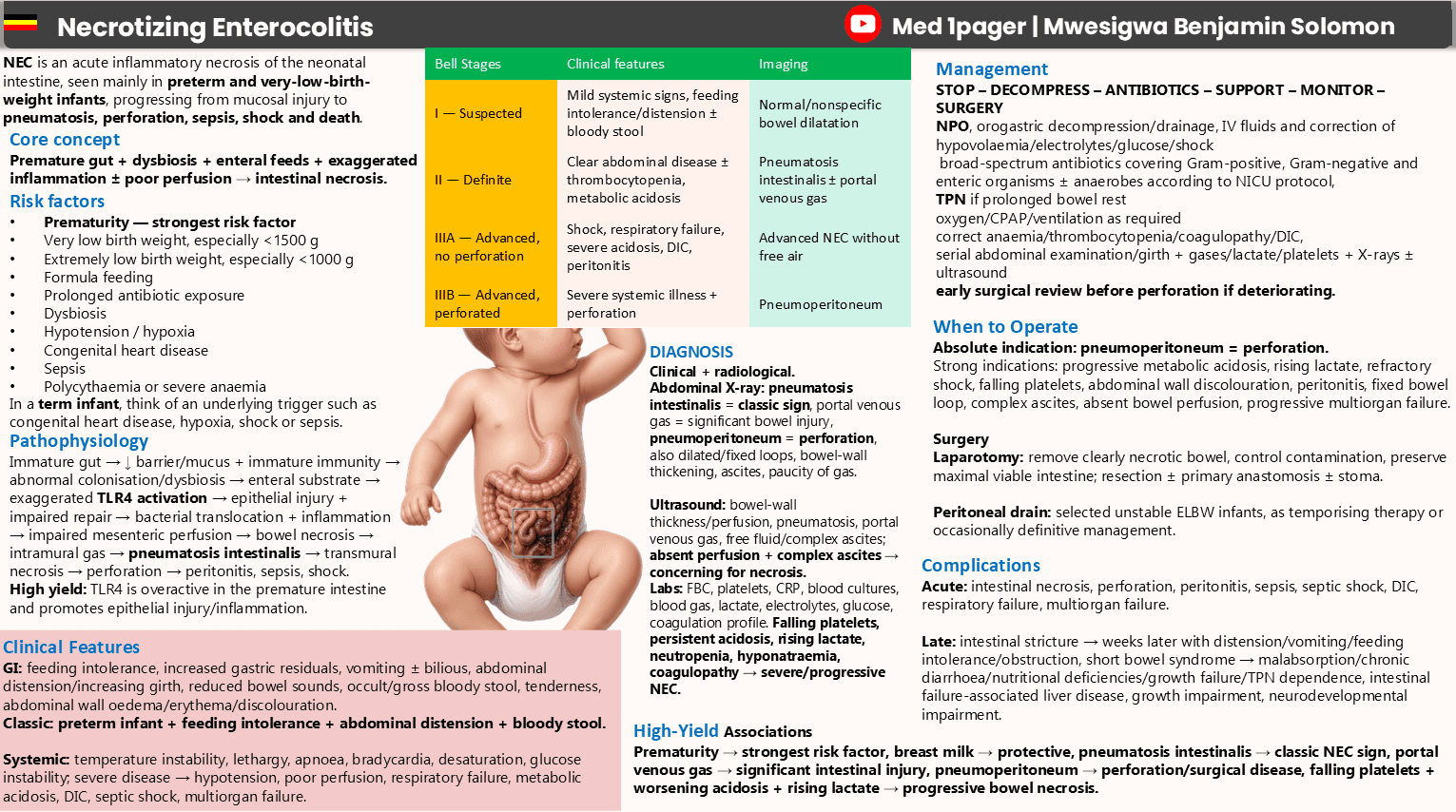
Necrotizing enterocolitis is an acute inflammatory necrosis of the neonatal intestine seen primarily in preterm and very-low-birth-weight infants...
Pinch or double-tap to zoom. Drag to pan when zoomed in. Keyboard: + / − to zoom, arrow keys to pan, 0 to fit.
Free to download for personal study. You can also save the image directly.
Read topic overview
Necrotizing enterocolitis is an acute inflammatory necrosis of the neonatal intestine seen primarily in preterm and very-low-birth-weight infants, progressing from mucosal injury to pneumatosis intestinalis, bowel perforation, peritonitis, sepsis, shock, and death. Its pathogenesis involves an immature intestinal barrier, microbial dysbiosis, enteral feeding substrate, exaggerated Toll-like receptor 4 inflammation, and impaired mesenteric perfusion. Mastering the modified Bell staging criteria, radiographic and ultrasound hallmarks, medical decompression and antibiotic protocols, and absolute versus relative indications for surgery is essential for pediatrics and surgery examinations.
Clinical Self-Assessment
Test your understanding
Select an answer on any question to immediately see if you are right and read the clinical explanation.
Showing 5 of 20 questions (0 answered).