
Internal Medicine

chronic kidney disease

Chronic kidney disease is defined as abnormalities of kidney structure or function persisting for three or more months, typically characterized by a glomerular filtration rate below 60 mL/min/1.73 m² or markers of kidney damage such as albuminuria. This condition is clinically significant because it progresses through identifiable stages driven by hyperfiltration, fibrosis, and RAAS activation, ultimately leading to multisystem complications including cardiovascular disease, anemia, mineral bone disorder, and uremic syndrome. Medical students must understand CKD because it affects a substantial portion of patients across nearly all medical specialties, requires early identification and intervention to slow progression, and demands careful medication dosing and avoidance of nephrotoxins to prevent further kidney injury.

Free forever

The summary, the quiz, and the download stay accessible without forcing a sign-in flow. Donations only support the mission.
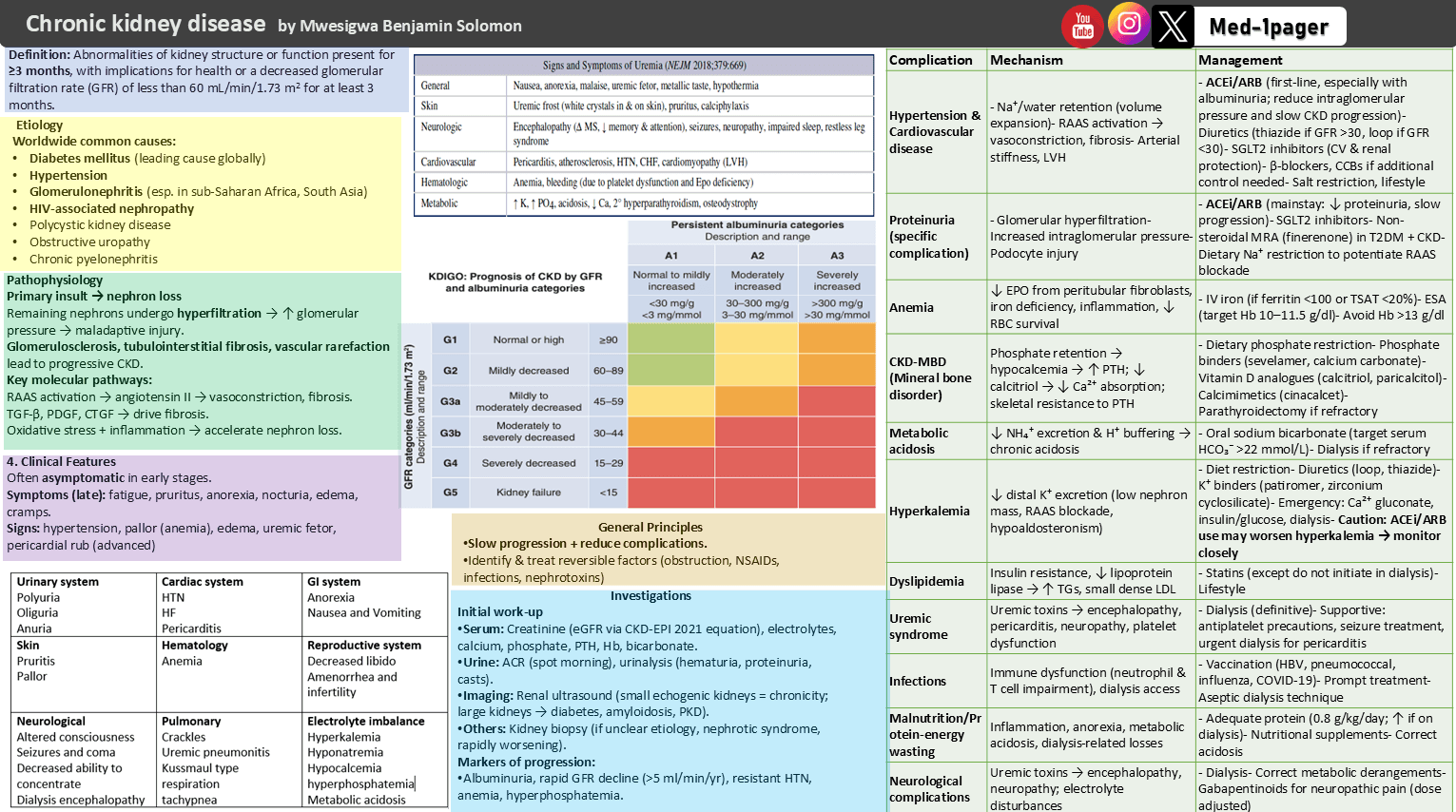
chronic kidney disease one-page medical summary

Right-click or long-press to save the image directly.

Quiz mode

Test your knowledge

Answer the visible questions first, then score yourself before revealing more.

1. What is the definition of chronic kidney disease according to the summary?

2. What is the leading cause of chronic kidney disease globally?

3. Which GFR category represents kidney failure according to the KDIGO classification?

4. What is the albumin-to-creatinine ratio (ACR) range for category A2 (moderately increased albuminuria)?

5. Which pathophysiological process occurs in remaining nephrons after primary insult causing nephron loss?

Answer all 5 visible questions to submit.
Subscribe free