
Wound Healing & Wound Care
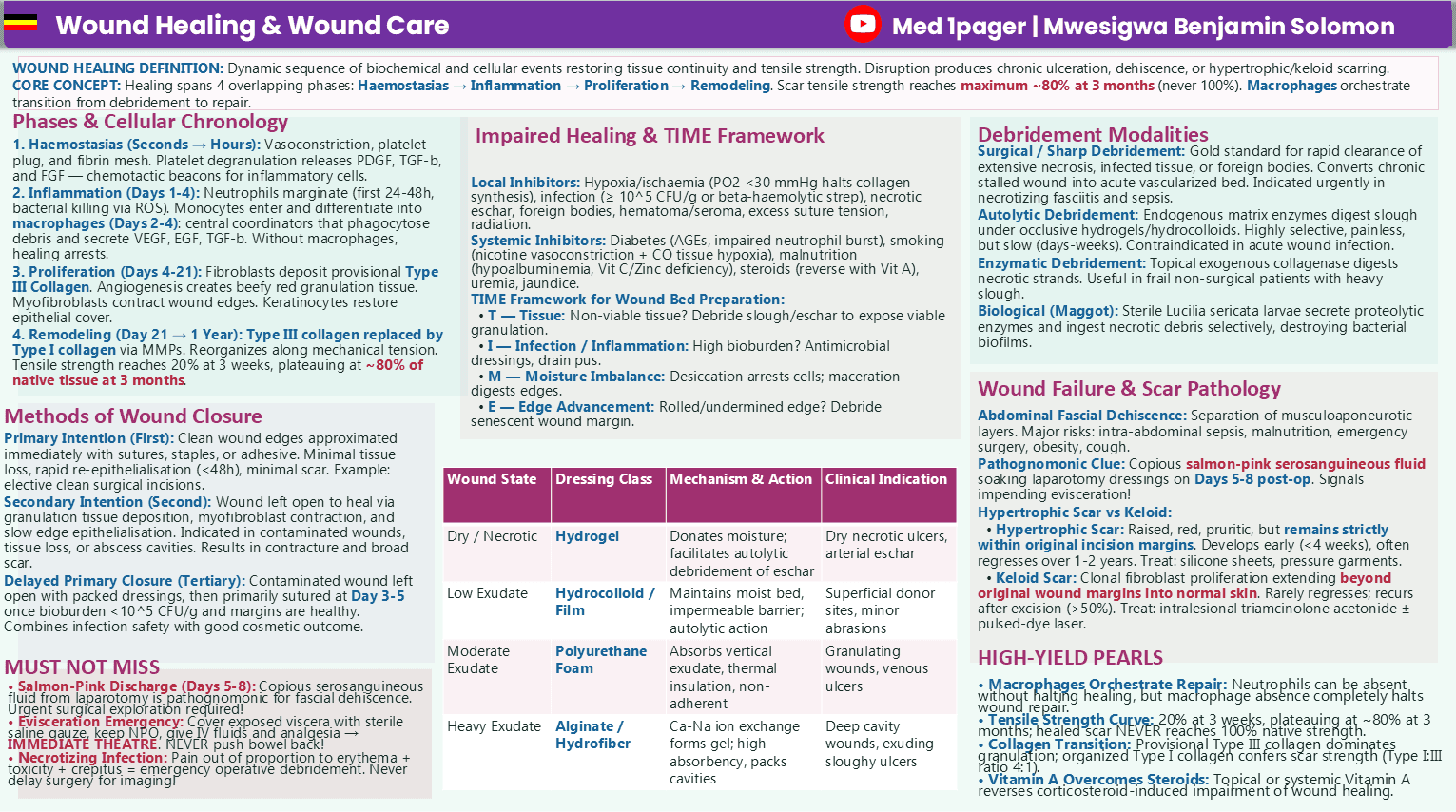
Wound healing is a tightly regulated, four-phase biological cascade—haemostasis, inflammation, proliferation, and remodeling—that restores tissue...
Pinch or double-tap to zoom. Drag to pan when zoomed in. Keyboard: + / − to zoom, arrow keys to pan, 0 to fit.
Free to download for personal study. You can also save the image directly.
Read topic overview
Wound healing is a tightly regulated, four-phase biological cascade—haemostasis, inflammation, proliferation, and remodeling—that restores tissue integrity and tensile strength after injury. Clinicians must understand the cellular chronology, collagen maturation dynamics, closure methods, and the wound bed preparation framework to select appropriate debridement and dressing modalities. Recognizing systemic and local inhibitors of healing alongside pathological scarring and fascial dehiscence is vital for surgical practice and clinical exams.
Clinical Self-Assessment
Test your understanding
Select an answer on any question to immediately see if you are right and read the clinical explanation.
Showing 5 of 20 questions (0 answered).