
Trauma assessment
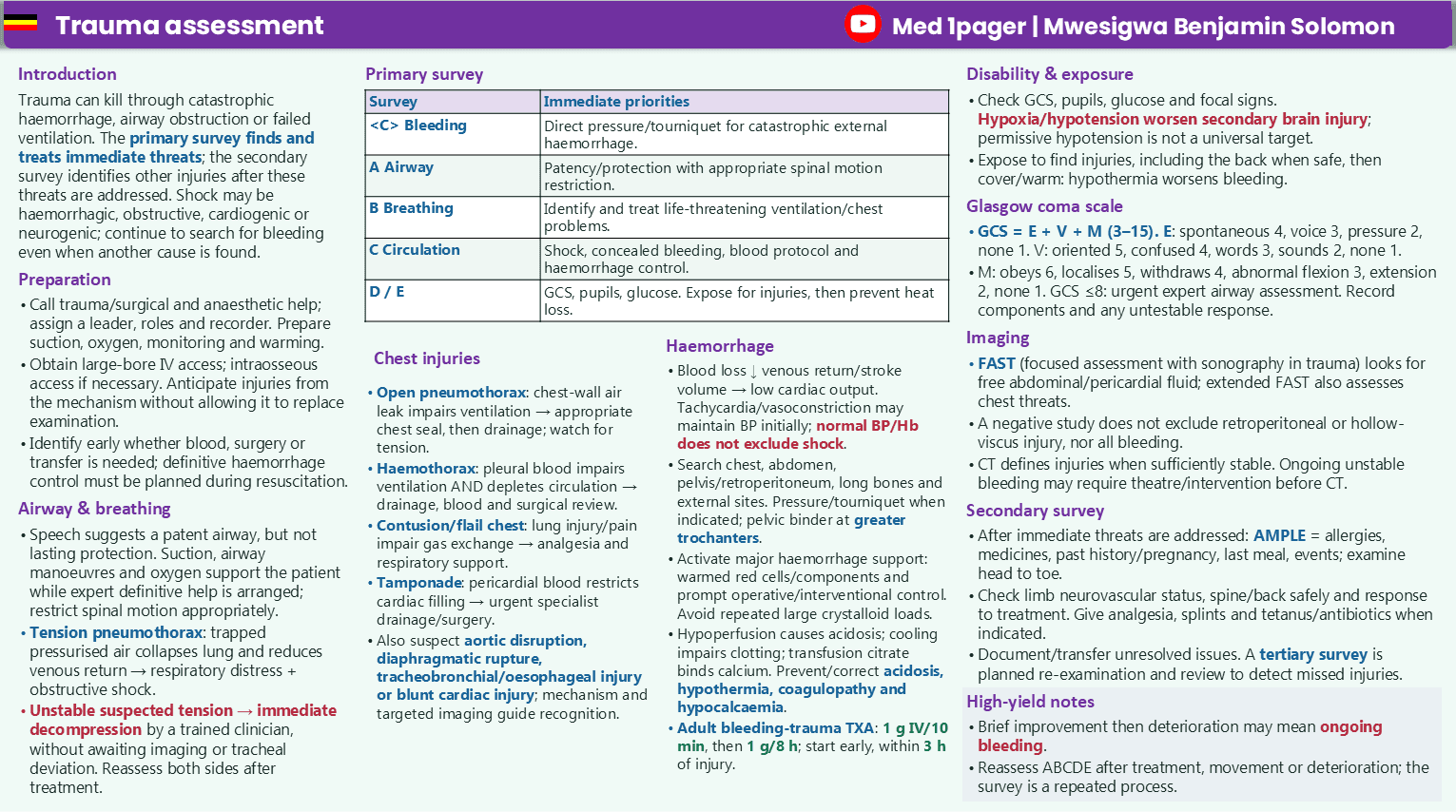
Trauma assessment follows a structured, repeatable primary survey designed to identify and treat immediately life-threatening injuries simultaneously...
Pinch or double-tap to zoom. Drag to pan when zoomed in. Keyboard: + / − to zoom, arrow keys to pan, 0 to fit.
Free to download for personal study. You can also save the image directly.
Read topic overview
Trauma assessment follows a structured, repeatable primary survey designed to identify and treat immediately life-threatening injuries simultaneously before proceeding to a head-to-toe secondary survey. Rapid control of catastrophic haemorrhage, airway protection with spinal motion restriction, decompression of tension thoracic emergencies, balanced damage-control resuscitation, and prevention of the lethal triad of hypothermia, acidosis, and coagulopathy are critical determinants of survival. Mastering primary survey priorities, Glasgow Coma Scale scoring, bedside ultrasound limitations, and tranexamic acid protocols is fundamental for acute care and surgery.
Clinical Self-Assessment
Test your understanding
Select an answer on any question to immediately see if you are right and read the clinical explanation.
Showing 5 of 20 questions (0 answered).