
Surgical Nutrition & Refeeding Syndrome
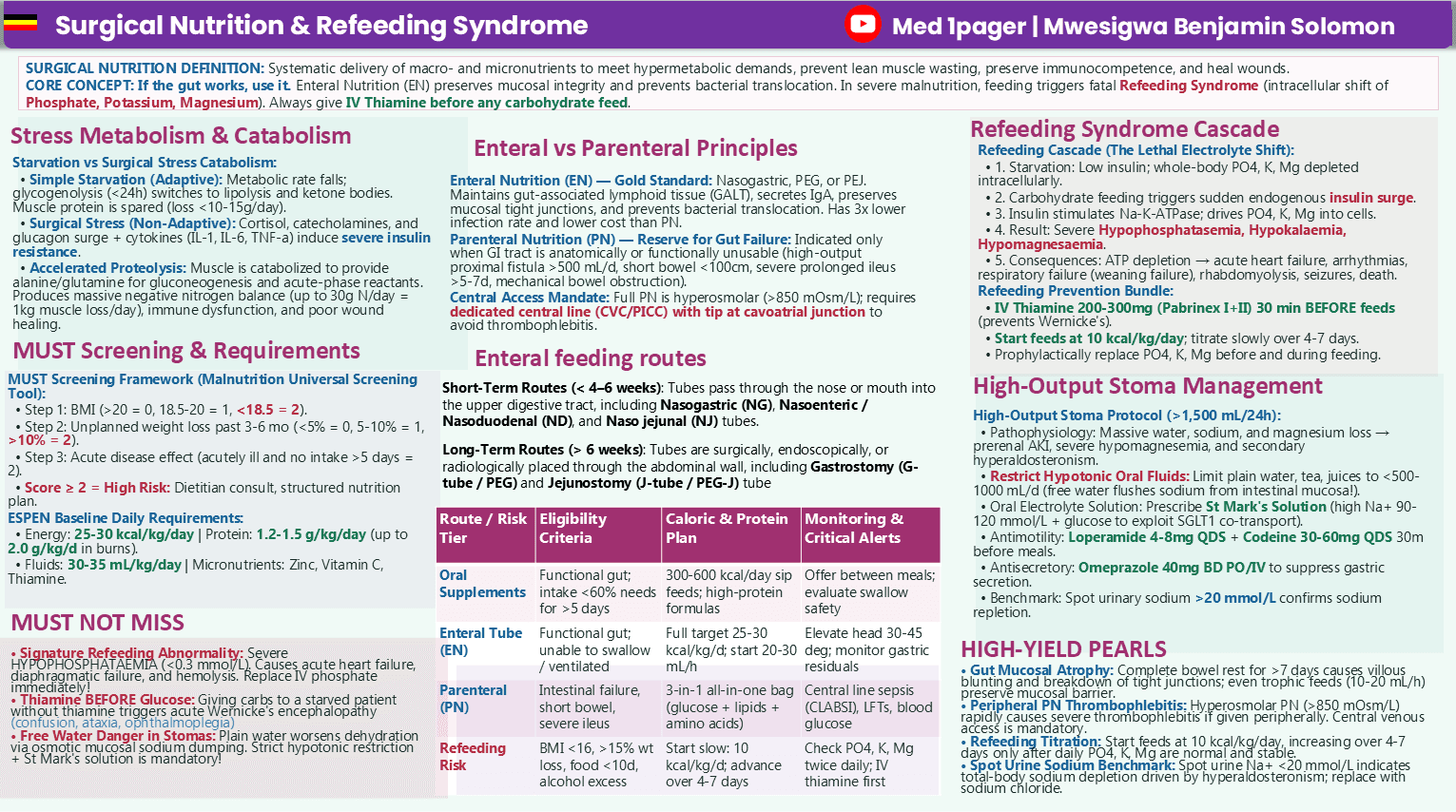
Surgical nutrition addresses the profound hypermetabolic, insulin-resistant, and proteolysis-driven catabolic state induced by operative trauma and sepsis.
Pinch or double-tap to zoom. Drag to pan when zoomed in. Keyboard: + / − to zoom, arrow keys to pan, 0 to fit.
Free to download for personal study. You can also save the image directly.
Read topic overview
Surgical nutrition addresses the profound hypermetabolic, insulin-resistant, and proteolysis-driven catabolic state induced by operative trauma and sepsis. Whenever the gastrointestinal tract is functional, enteral nutrition is strongly preferred over parenteral nutrition to preserve gut-associated lymphoid tissue, mucosal tight junctions, and barrier integrity. Recognizing patients at risk for fatal refeeding syndrome—characterized by insulin-driven intracellular shifts of phosphate, potassium, and magnesium—and managing high-output stomas are critical competencies for surgical care.
Clinical Self-Assessment
Test your understanding
Select an answer on any question to immediately see if you are right and read the clinical explanation.
Showing 5 of 20 questions (0 answered).