
CardiologyInternal Medicine

stroke/ acuteischemic stroke/ cerebral vascular accident

Acute ischemic stroke is a neurological emergency caused by sudden occlusion of cerebral blood vessels, leading to rapid irreversible death of brain tissue in the ischemic core while surrounding penumbral tissue remains potentially salvageable for hours, making time-critical intervention essential. The clinical presentation varies based on the affected vascular territory, with middle cerebral artery strokes causing contralateral face and arm weakness with aphasia or neglect, while posterior circulation strokes produce crossed signs, vertigo, and ataxia. For medical students, understanding stroke is fundamental because it represents a leading cause of death and disability worldwide where rapid recognition of symptoms, urgent neuroimaging to exclude hemorrhage, and timely administration of thrombolysis or mechanical thrombectomy within narrow therapeutic windows can dramatically alter patient outcomes and reduce long-term neurological deficits.

Free forever

The summary, the quiz, and the download stay accessible without forcing a sign-in flow. Donations only support the mission.
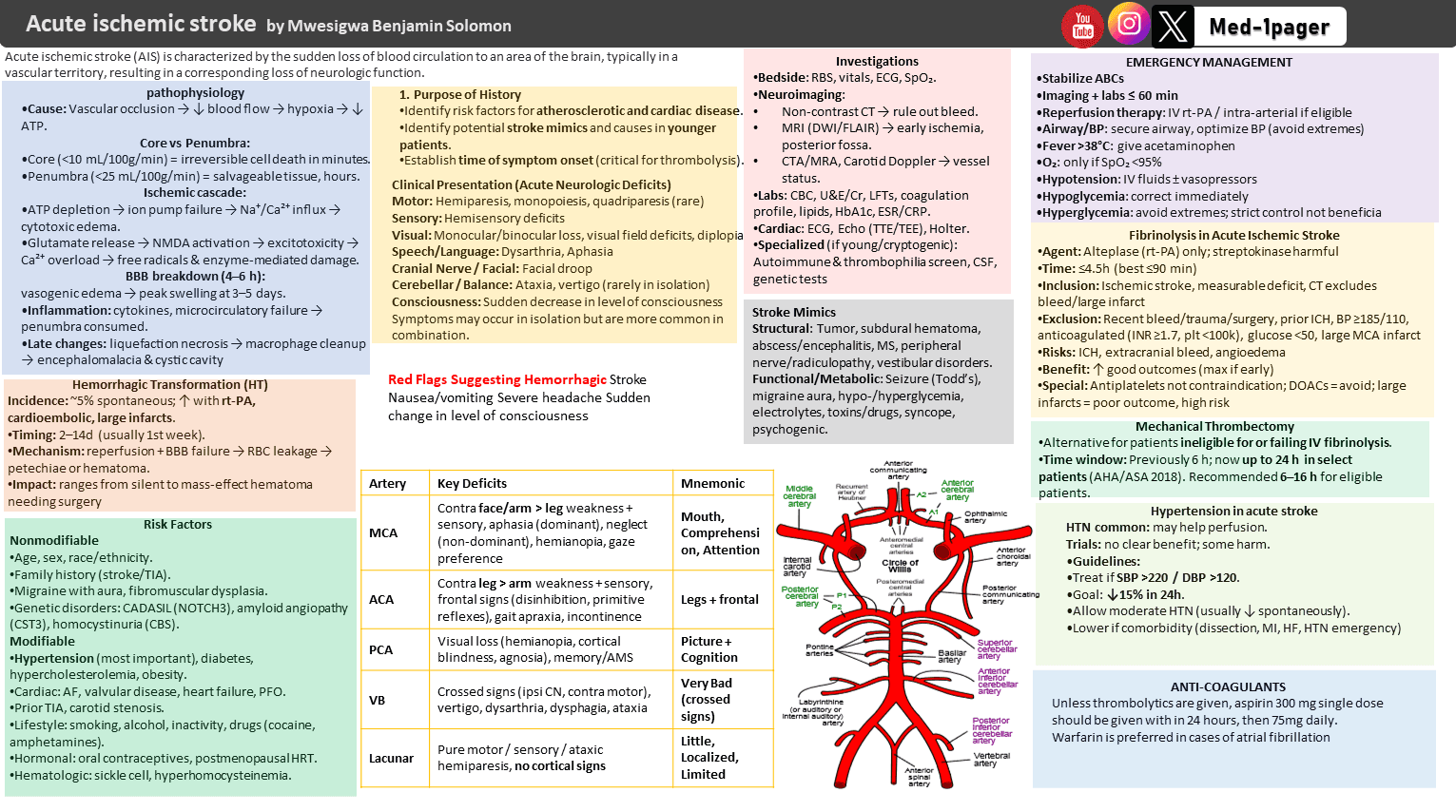
stroke/ acuteischemic stroke/ cerebral vascular accident one-page medical summary

Right-click or long-press to save the image directly.

Quiz mode

Test your knowledge

Answer the visible questions first, then score yourself before revealing more.

1. What is the blood flow threshold that defines the ischemic core in acute ischemic stroke?

2. What is the maximum time window for administering IV rt-PA (alteplase) in acute ischemic stroke?

3. Which is the most important modifiable risk factor for stroke mentioned in the summary?

4. What is the typical timing for hemorrhagic transformation after ischemic stroke?

5. Which imaging modality is critical for ruling out hemorrhagic stroke before thrombolysis?

Answer all 5 visible questions to submit.
Subscribe free