
Shock & Resuscitation
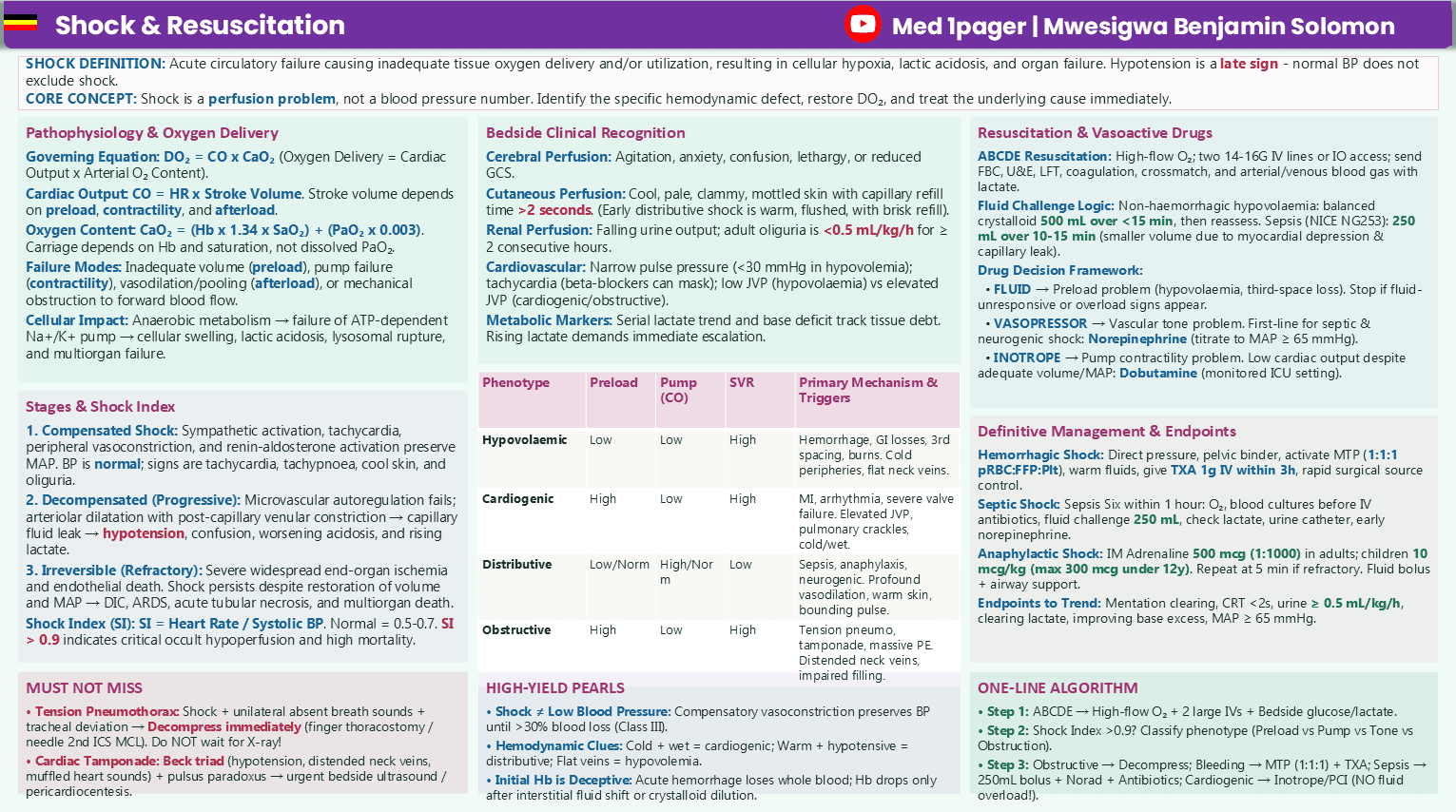
Shock is an acute circulatory failure causing inadequate tissue oxygen delivery and/or cellular oxygen utilization, resulting in cellular hypoxia...
Pinch or double-tap to zoom. Drag to pan when zoomed in. Keyboard: + / − to zoom, arrow keys to pan, 0 to fit.
Free to download for personal study. You can also save the image directly.
Read topic overview
Shock is an acute circulatory failure causing inadequate tissue oxygen delivery and/or cellular oxygen utilization, resulting in cellular hypoxia, lactic acidosis, and progressive organ failure. Because compensatory sympathetic vasoconstriction preserves arterial blood pressure until more than 30% of blood volume is lost, shock must be recognized early as a tissue perfusion problem using bedside clinical markers, the shock index, and serial lactate trends rather than waiting for hypotension. Mastering the oxygen delivery equations, the four hemodynamic shock phenotypes, and targeted resuscitation algorithms is essential for surgery and internal medicine examinations.
Clinical Self-Assessment
Test your understanding
Select an answer on any question to immediately see if you are right and read the clinical explanation.
Showing 5 of 20 questions (0 answered).