
Routine Postoperative Care
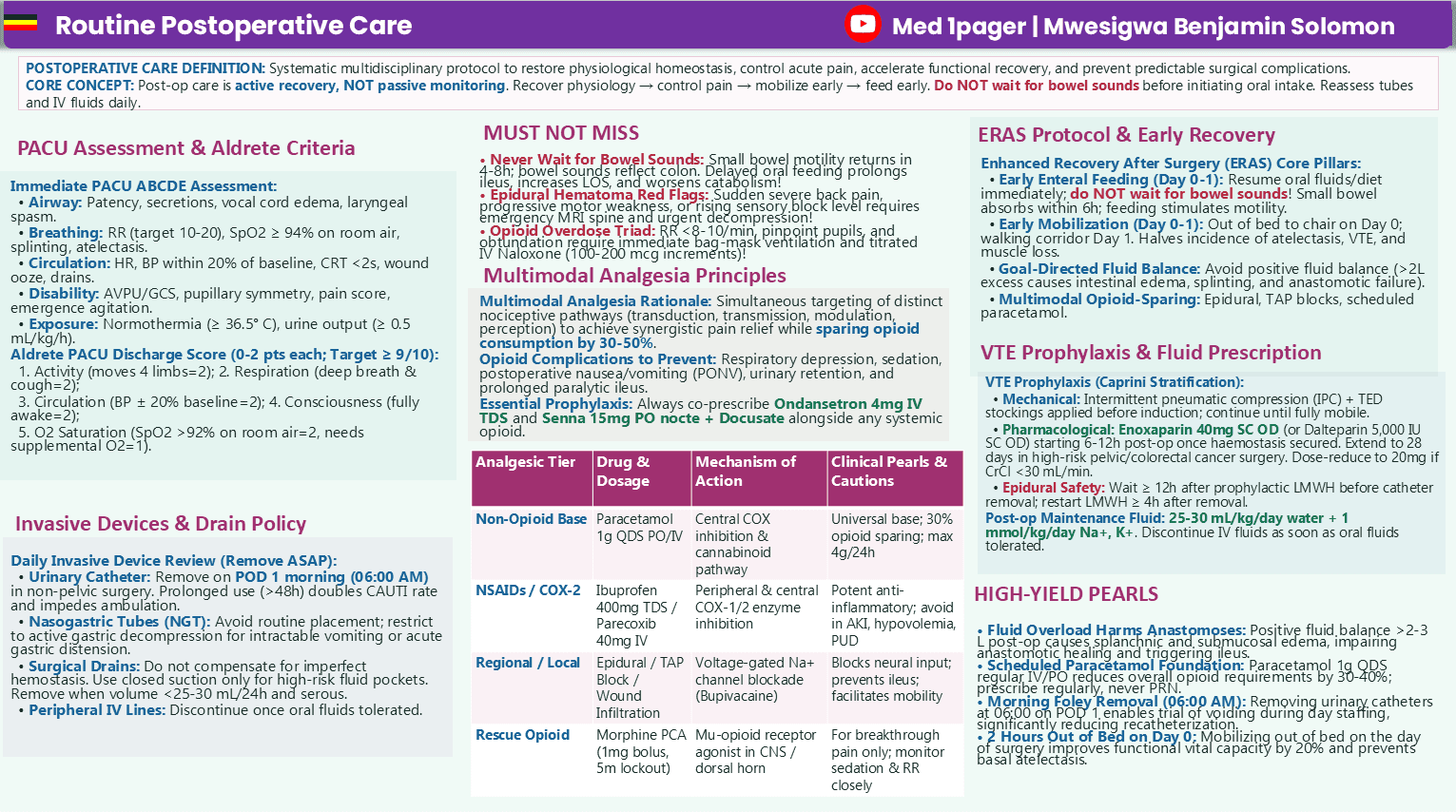
Routine postoperative care is an active, multidisciplinary recovery protocol designed to restore physiological homeostasis, provide multimodal...
Pinch or double-tap to zoom. Drag to pan when zoomed in. Keyboard: + / − to zoom, arrow keys to pan, 0 to fit.
Free to download for personal study. You can also save the image directly.
Read topic overview
Routine postoperative care is an active, multidisciplinary recovery protocol designed to restore physiological homeostasis, provide multimodal opioid-sparing analgesia, and prevent predictable complications such as venous thromboembolism, atelectasis, and ileus. Guided by Enhanced Recovery After Surgery principles, modern care emphasizes early enteral feeding without waiting for bowel sounds, day-zero mobilization, euvolemic fluid balance, and prompt removal of invasive catheters and drains. Mastery of post-anesthesia care unit discharge criteria, analgesia ladders, and anticoagulation timing around neuraxial catheters is essential for safe ward management.
Clinical Self-Assessment
Test your understanding
Select an answer on any question to immediately see if you are right and read the clinical explanation.
Showing 5 of 20 questions (0 answered).