
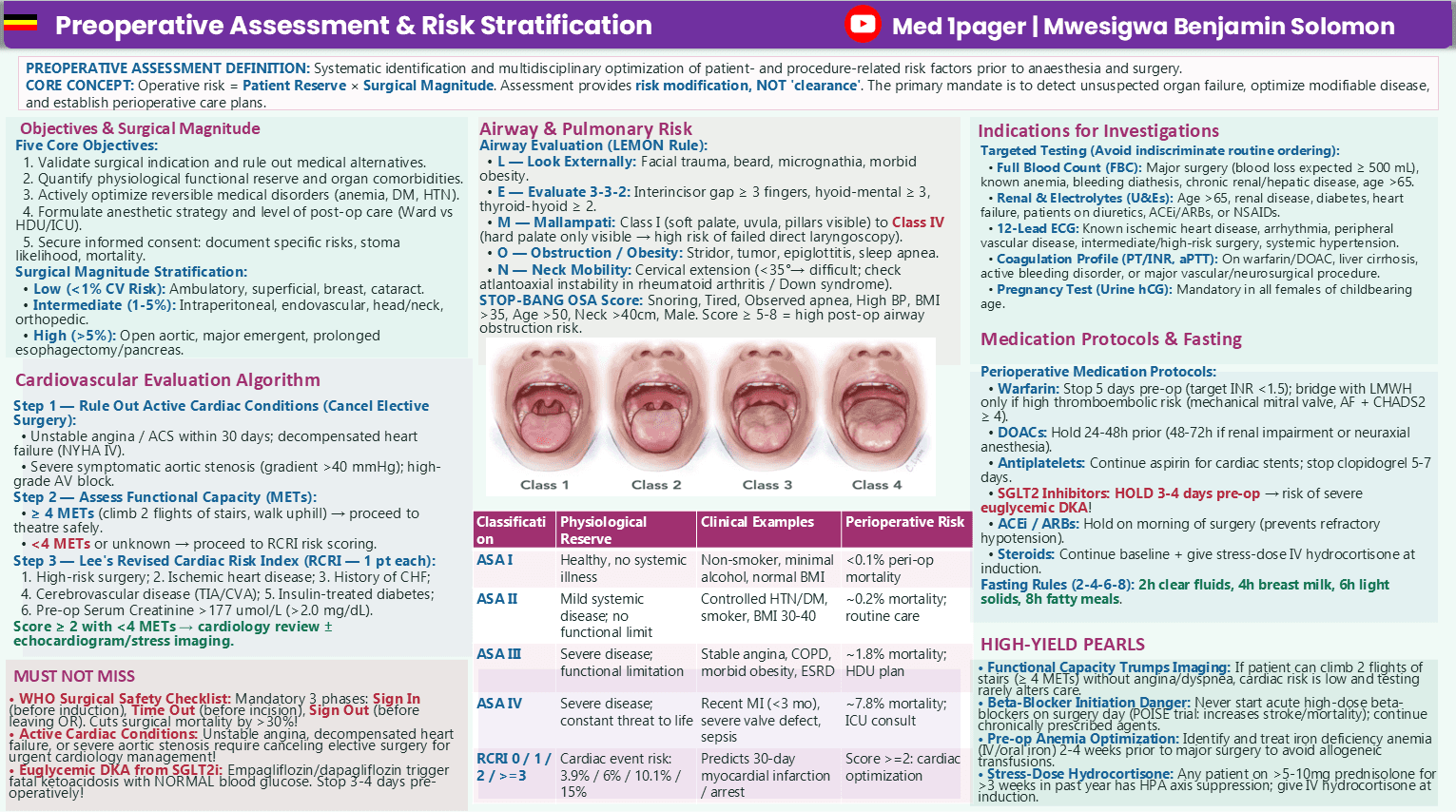
Preoperative Assessment & Risk Stratification
Preoperative assessment is the systematic identification and multidisciplinary optimization of patient- and procedure-specific risk factors before...
Pinch or double-tap to zoom. Drag to pan when zoomed in. Keyboard: + / − to zoom, arrow keys to pan, 0 to fit.
Free to download for personal study. You can also save the image directly.
Read topic overview
Preoperative assessment is the systematic identification and multidisciplinary optimization of patient- and procedure-specific risk factors before anesthesia and surgery. By integrating functional capacity , cardiac risk indices , American Society of Anesthesiologists physical status, airway evaluation , and targeted perioperative medication adjustments, clinicians actively modify operative risk rather than merely granting clearance. Mastering these protocols prevents catastrophic complications such as perioperative myocardial infarction, failed intubation, adrenal crisis, and euglycemic diabetic ketoacidosis.
Clinical Self-Assessment
Test your understanding
Select an answer on any question to immediately see if you are right and read the clinical explanation.
Showing 5 of 20 questions (0 answered).