
CardiologyInternal Medicine

heart failure

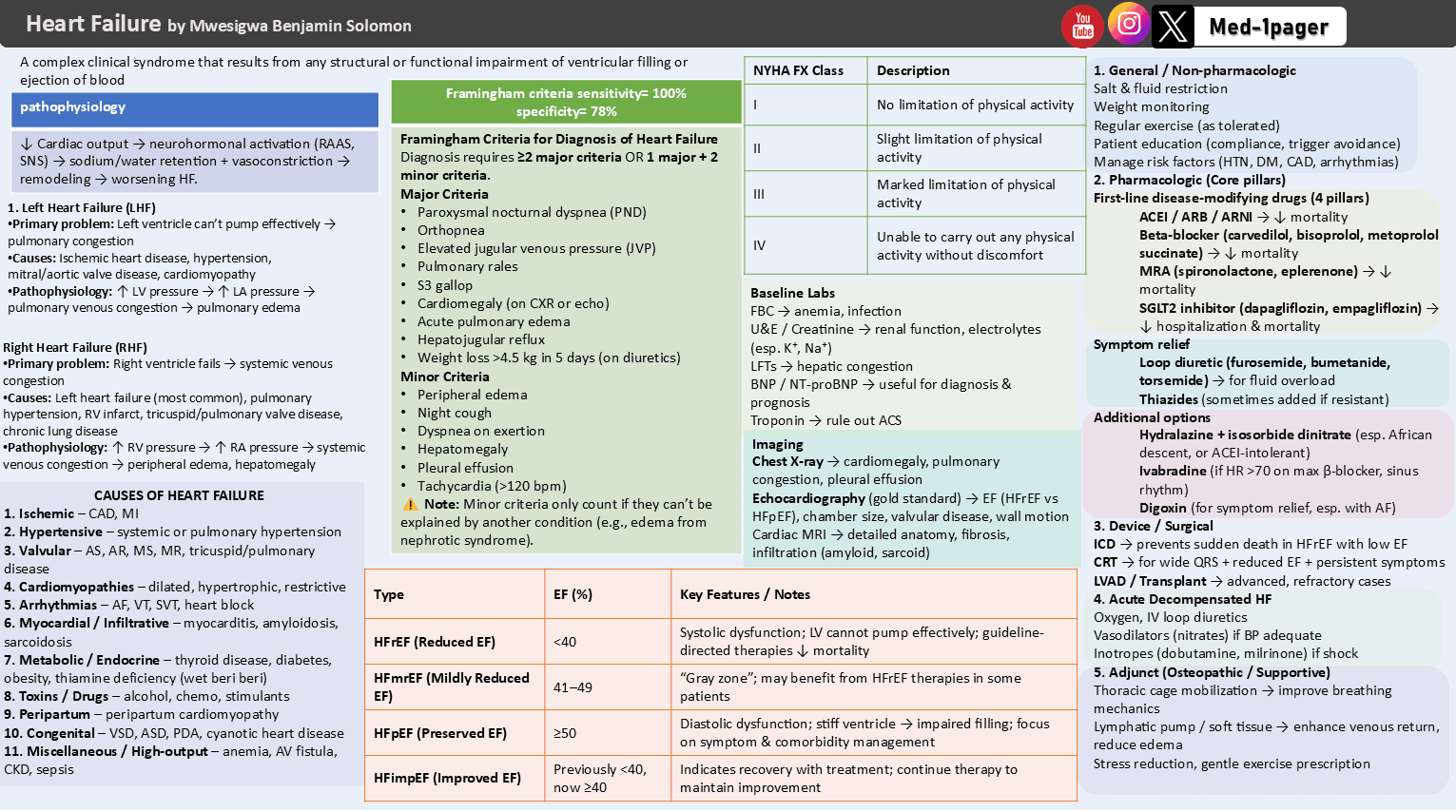
Heart failure is a complex clinical syndrome resulting from structural or functional impairment of ventricular filling or ejection of blood, most commonly caused by ischemic heart disease, hypertension, or valvular disease. The condition is classified by ejection fraction into HFrEF, HFmrEF, and HFpEF, with treatment strategies differing significantly based on this classification, as guideline-directed medical therapy with the four pillars of ACEI/ARB/ARNI, beta-blockers, MRAs, and SGLT2 inhibitors has been shown to reduce mortality specifically in HFrEF. Understanding the pathophysiology of left versus right heart failure, recognizing the Framingham diagnostic criteria, and mastering the stepwise approach to pharmacologic and device-based management are essential competencies for medical students, as heart failure remains one of the leading causes of hospitalization and mortality worldwide.

Free forever

The summary, the quiz, and the download stay accessible without forcing a sign-in flow. Donations only support the mission.
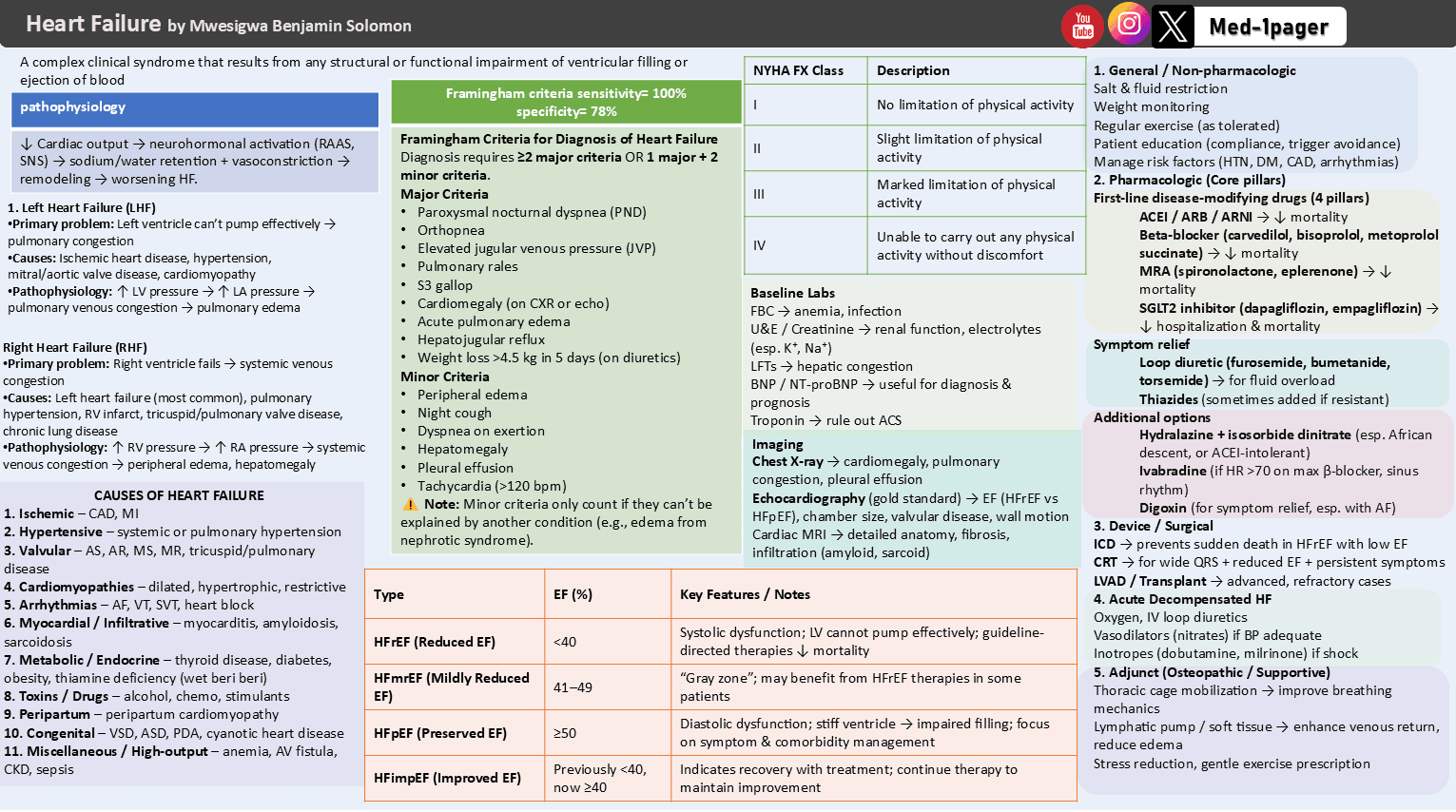
heart failure one-page medical summary

Right-click or long-press to save the image directly.

Quiz mode

Test your knowledge

Answer the visible questions first, then score yourself before revealing more.

1. What is the ejection fraction (EF) threshold that defines HFrEF (Heart Failure with Reduced Ejection Fraction)?

2. Which of the following is a major criterion in the Framingham Criteria for diagnosing heart failure?

3. What is the sensitivity of the Framingham criteria for diagnosing heart failure?

4. Which NYHA Functional Class describes a patient with marked limitation of physical activity?

5. What is the most common cause of right heart failure?

Answer all 5 visible questions to submit.
Subscribe free