
Haemorrhage & Blood Transfusion
Hemorrhage is acute intravascular blood loss causing hypovolemia, reduced venous return, falling cardiac output, and inadequate tissue oxygenation.
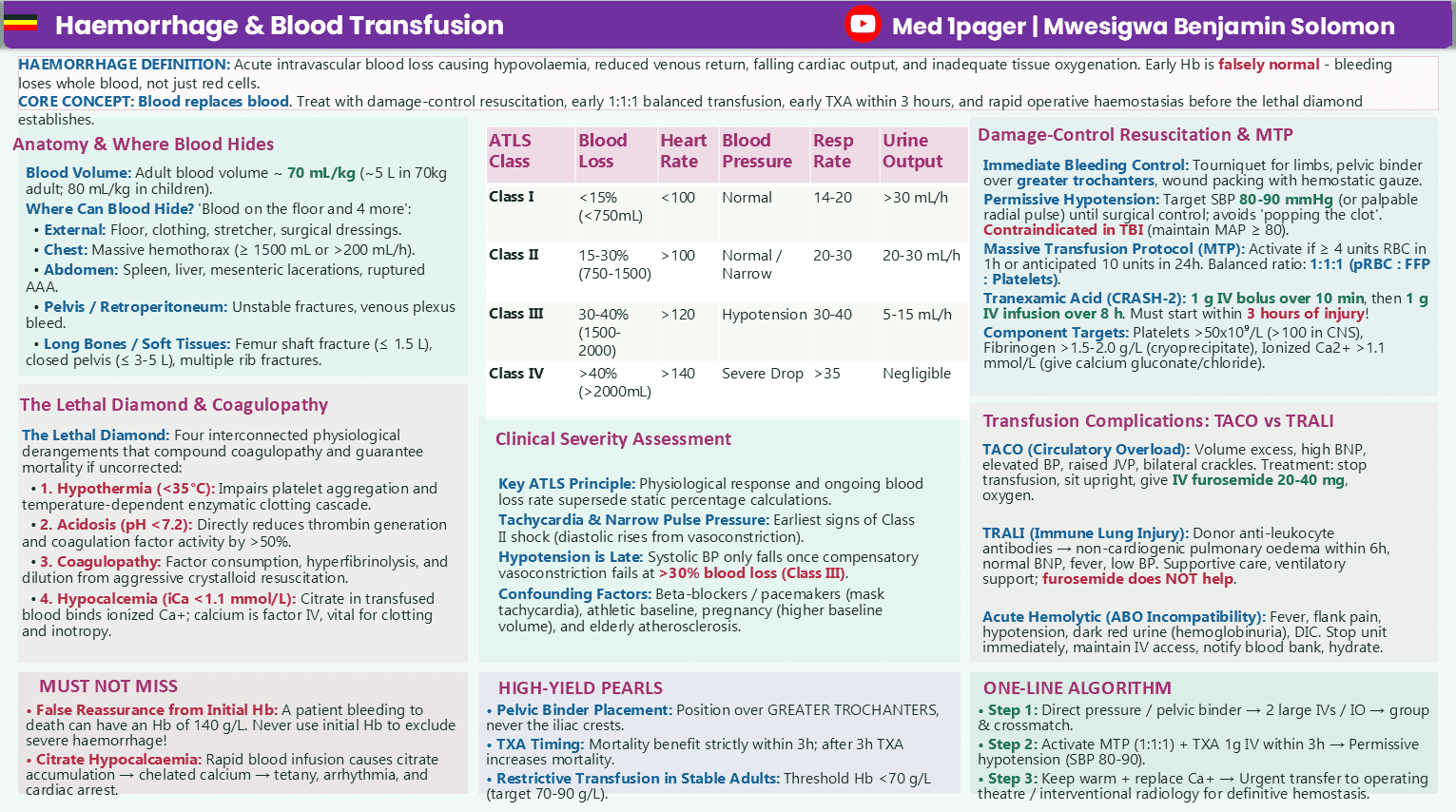
Pinch or double-tap to zoom. Drag to pan when zoomed in. Keyboard: + / − to zoom, arrow keys to pan, 0 to fit.
Free to download for personal study. You can also save the image directly.
Read topic overview
Hemorrhage is acute intravascular blood loss causing hypovolemia, reduced venous return, falling cardiac output, and inadequate tissue oxygenation. Because early hemoglobin concentration is falsely normal during whole-blood loss and systolic hypotension does not appear until more than 30% of blood volume is lost, management requires rapid clinical severity grading, anatomic localization of hidden blood loss, and damage-control resuscitation before the lethal diamond of hypothermia, acidosis, coagulopathy, and hypocalcemia establishes. Mastering massive transfusion protocols (1:1:1 balanced ratio), tranexamic acid timing, permissive hypotension, and transfusion complications is essential for surgery examinations.
Clinical Self-Assessment
Test your understanding
Select an answer on any question to immediately see if you are right and read the clinical explanation.
Showing 5 of 20 questions (0 answered).