
Gastrointestinal bleeding
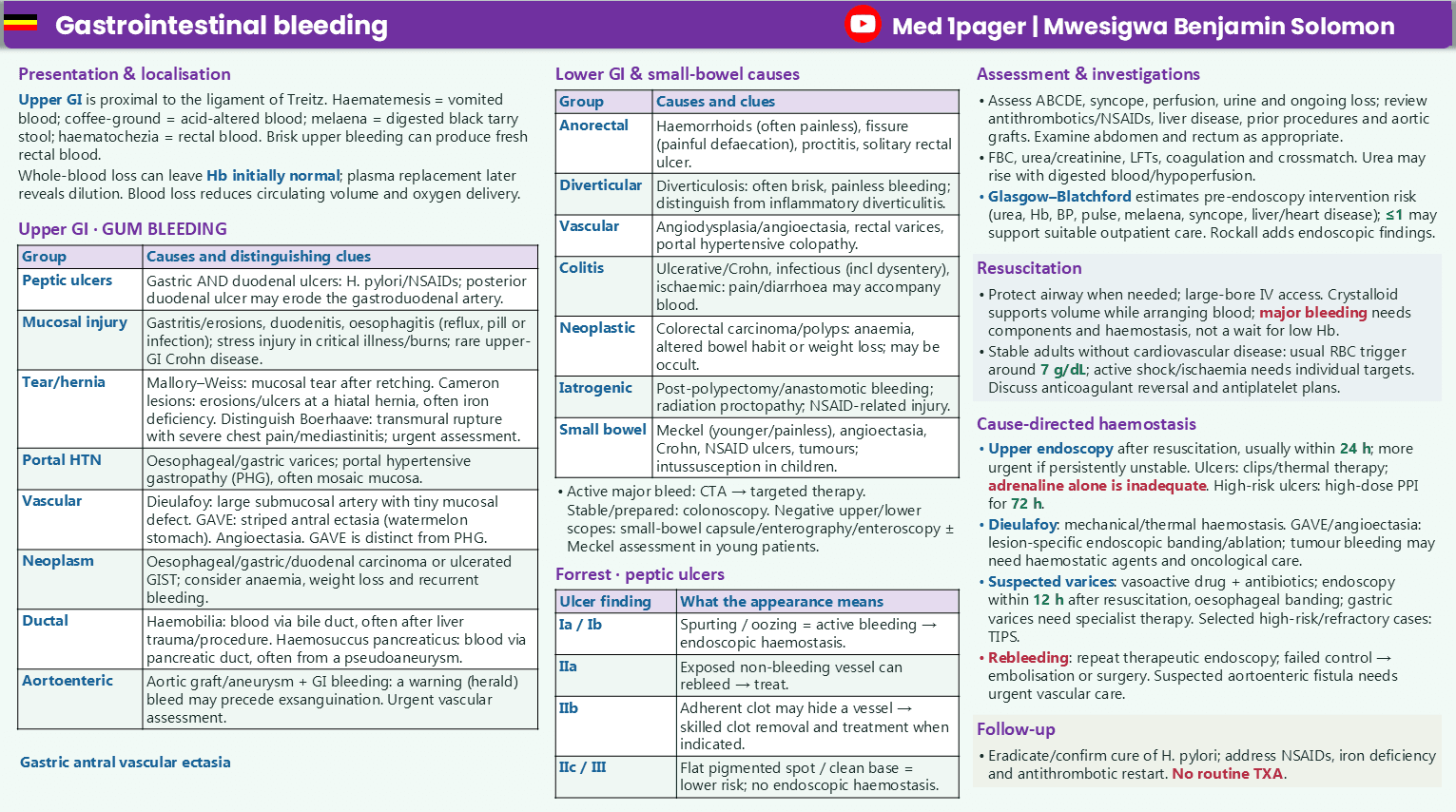
Gastrointestinal bleeding encompasses haemorrhage originating anywhere from the oesophagus to the anus, anatomically divided at the ligament of Treitz...
Pinch or double-tap to zoom. Drag to pan when zoomed in. Keyboard: + / − to zoom, arrow keys to pan, 0 to fit.
Free to download for personal study. You can also save the image directly.
Read topic overview
Gastrointestinal bleeding encompasses haemorrhage originating anywhere from the oesophagus to the anus, anatomically divided at the ligament of Treitz into upper and lower gastrointestinal sources. Because brisk bleeding can rapidly precipitate hypovolaemic shock while initial haemoglobin concentrations remain deceptively normal, early haemodynamic resuscitation, risk stratification, and cause-directed endoscopic or radiological haemostasis are paramount. A structured mastery of clinical presentations, Forrest ulcer classification, variceal versus non-variceal pathways, and lower gastrointestinal diagnostic algorithms is vital for both internal medicine and surgery.
Clinical Self-Assessment
Test your understanding
Select an answer on any question to immediately see if you are right and read the clinical explanation.
Showing 5 of 20 questions (0 answered).