
Gallstones, cholecystitis & cholangitis
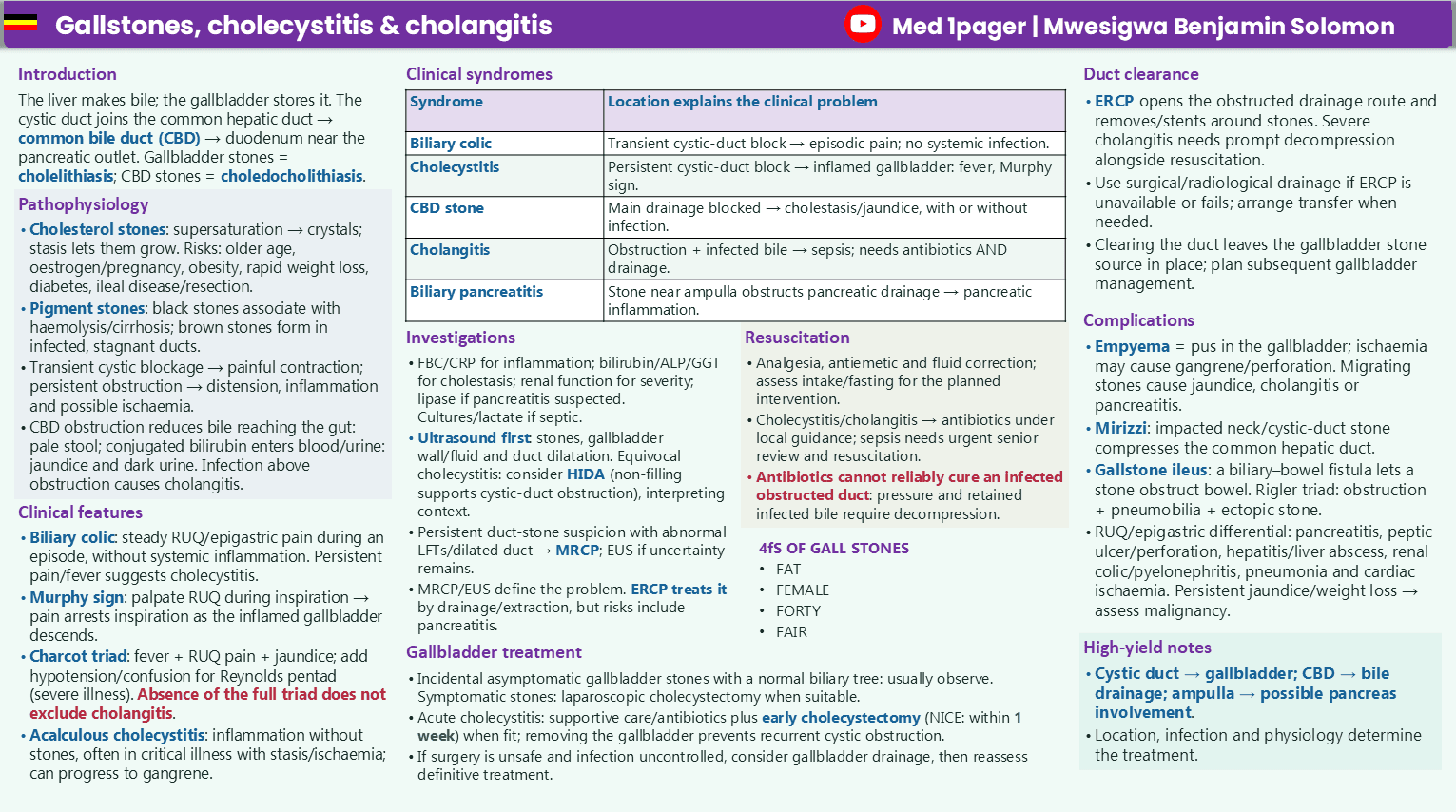
Gallstone disease spans a clinical spectrum determined by the anatomical site of stone impaction and the presence of secondary bacterial infection...
Pinch or double-tap to zoom. Drag to pan when zoomed in. Keyboard: + / − to zoom, arrow keys to pan, 0 to fit.
Free to download for personal study. You can also save the image directly.
Read topic overview
Gallstone disease spans a clinical spectrum determined by the anatomical site of stone impaction and the presence of secondary bacterial infection, ranging from transient biliary colic and acute cholecystitis to life-threatening acute cholangitis and biliary pancreatitis. Accurate differentiation using clinical hallmarks, liver biochemistry, and targeted biliary imaging directs timely interventions such as early laparoscopic cholecystectomy or urgent endoscopic biliary decompression. Understanding the pathophysiology of cholesterol versus pigment stones, Charcot's triad, Reynolds' pentad, and complications like Mirizzi syndrome and gallstone ileus is essential for clinical practice.
Clinical Self-Assessment
Test your understanding
Select an answer on any question to immediately see if you are right and read the clinical explanation.
Showing 5 of 20 questions (0 answered).