
Acute pancreatitis
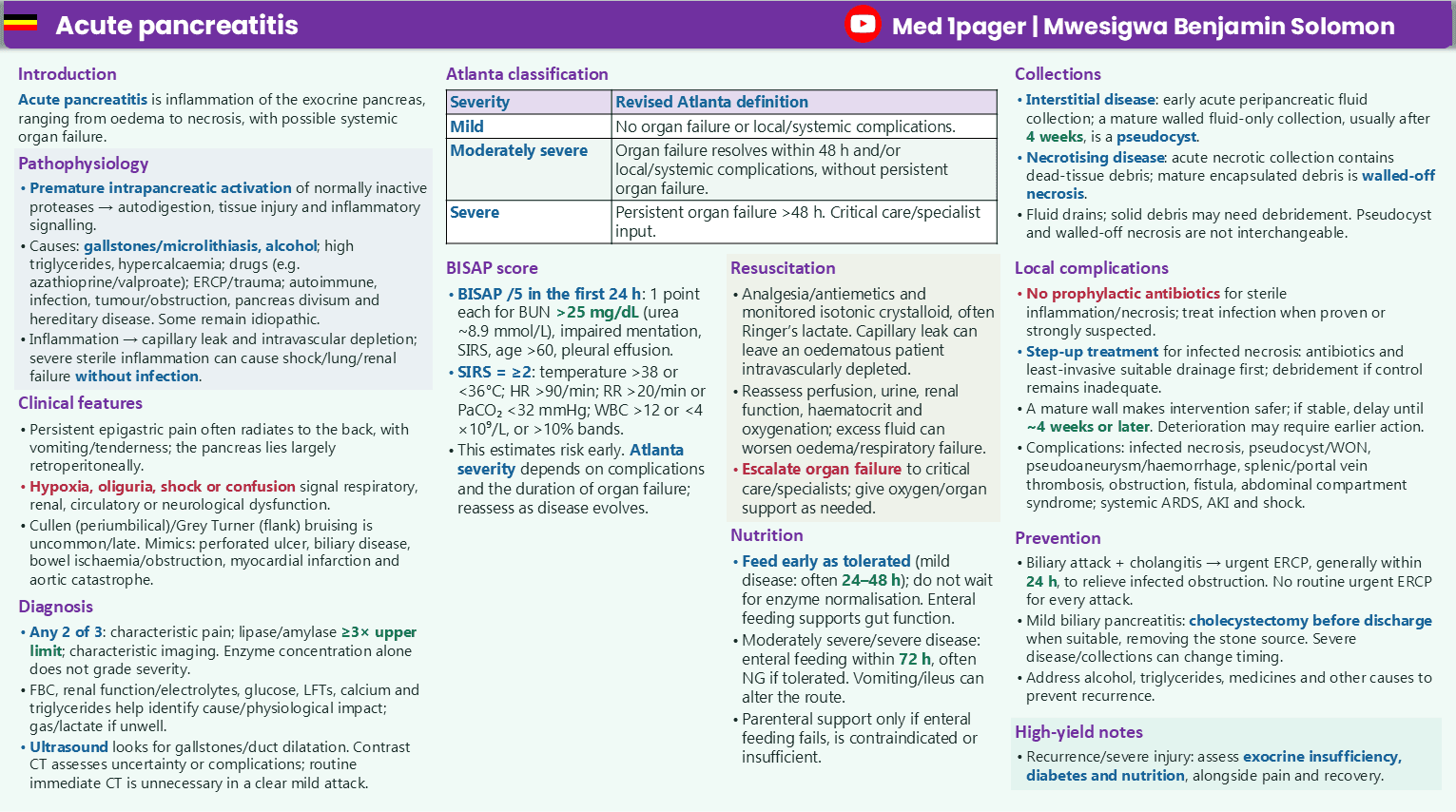
Acute pancreatitis is an acute inflammatory disorder of the exocrine pancreas triggered by premature intrapancreatic activation of digestive proteases...
Pinch or double-tap to zoom. Drag to pan when zoomed in. Keyboard: + / − to zoom, arrow keys to pan, 0 to fit.
Free to download for personal study. You can also save the image directly.
Read topic overview
Acute pancreatitis is an acute inflammatory disorder of the exocrine pancreas triggered by premature intrapancreatic activation of digestive proteases, most commonly secondary to gallstones or alcohol use. Disease severity ranges from mild interstitial oedema to necrotising pancreatitis complicated by massive third-space capillary leak, systemic inflammatory response syndrome, and persistent multiorgan failure. Mastery of the Revised Atlanta diagnostic and severity criteria, bedside risk scoring, goal-directed fluid resuscitation, early enteral nutrition, and the step-up approach to pancreatic collections is vital for clinical examinations.
Clinical Self-Assessment
Test your understanding
Select an answer on any question to immediately see if you are right and read the clinical explanation.
Showing 5 of 20 questions (0 answered).