
Acute Abdomen
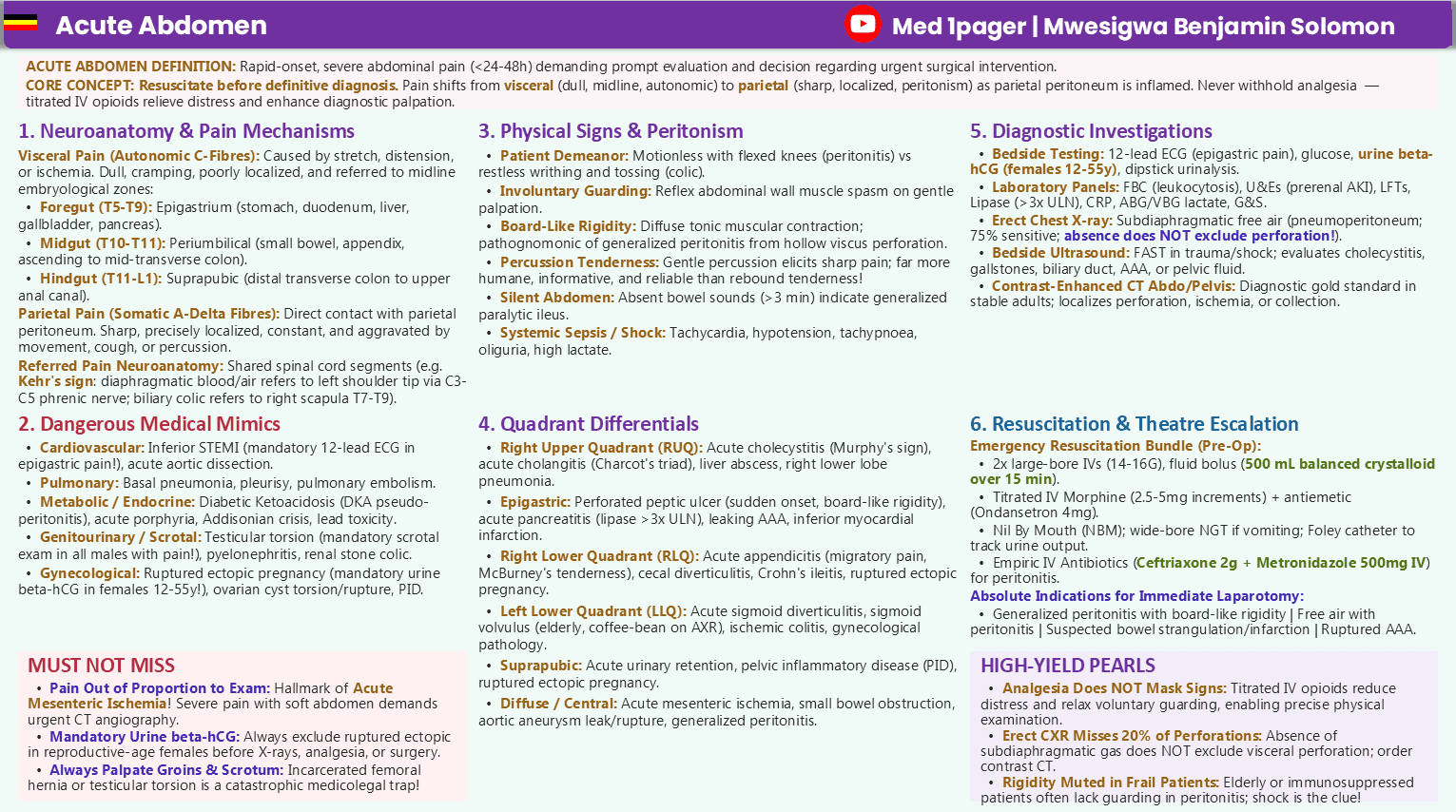
An acute abdomen is a rapid-onset, severe abdominal pain syndrome developing over less than 24 to 48 hours that requires urgent clinical evaluation...
Pinch or double-tap to zoom. Drag to pan when zoomed in. Keyboard: + / − to zoom, arrow keys to pan, 0 to fit.
Free to download for personal study. You can also save the image directly.
Read topic overview
An acute abdomen is a rapid-onset, severe abdominal pain syndrome developing over less than 24 to 48 hours that requires urgent clinical evaluation, immediate physiological resuscitation, and timely surgical decision-making. Distinguishing autonomic visceral pain from somatic parietal peritonism, recognizing life-threatening medical mimics, and identifying red flags such as pain out of proportion to examination findings are essential clinical skills. Modern management emphasizes simultaneous intravenous resuscitation, early titrated opioid analgesia without fear of masking physical signs, targeted imaging, and immediate laparotomy when generalized peritonitis or visceral ischemia is present.
Clinical Self-Assessment
Test your understanding
Select an answer on any question to immediately see if you are right and read the clinical explanation.
Showing 5 of 20 questions (0 answered).