
Acid-Base Balance & Blood Gases
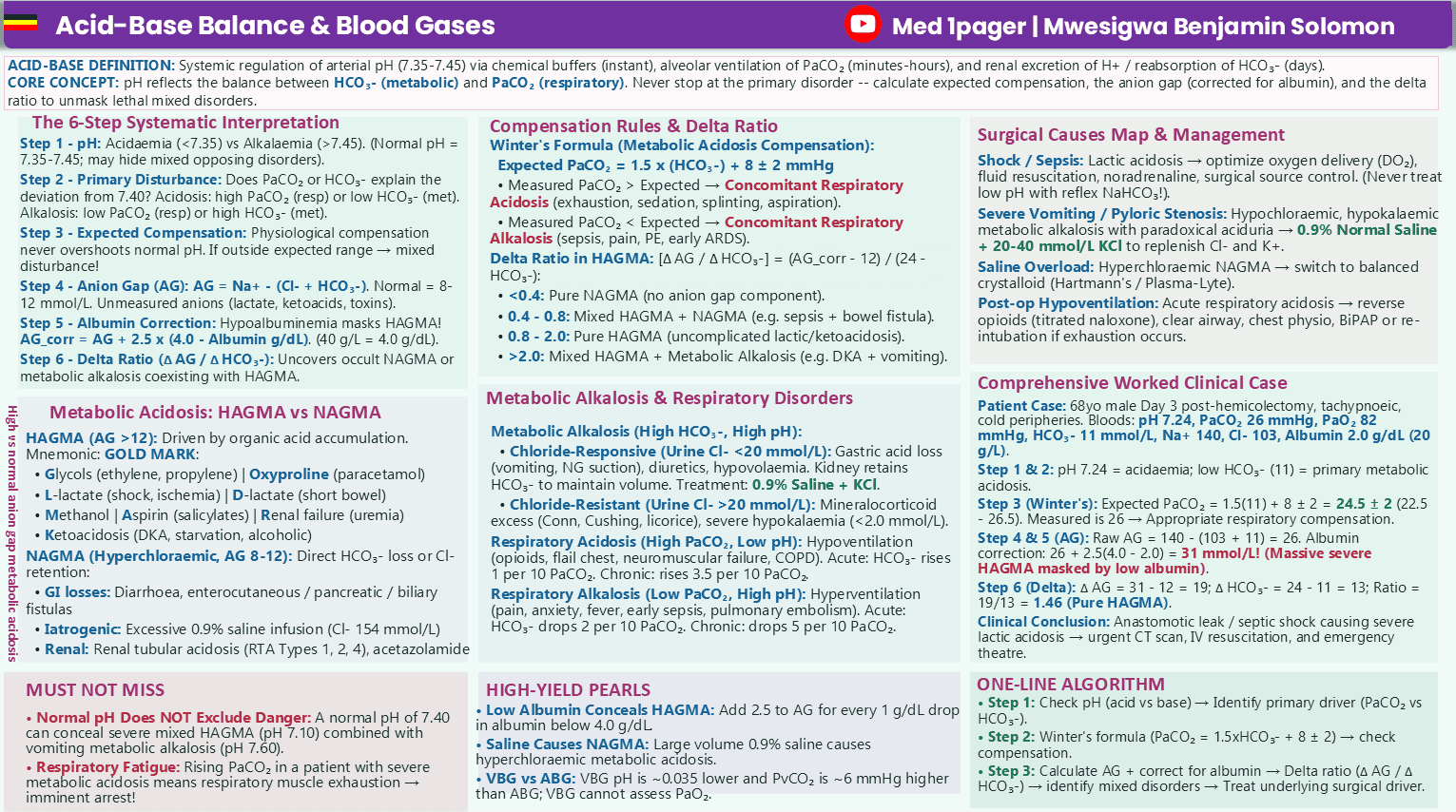
Acid-base balance and arterial blood gas interpretation provide a vital physiological assessment of systemic pH regulation via chemical buffers...
Pinch or double-tap to zoom. Drag to pan when zoomed in. Keyboard: + / − to zoom, arrow keys to pan, 0 to fit.
Free to download for personal study. You can also save the image directly.
Read topic overview
Acid-base balance and arterial blood gas interpretation provide a vital physiological assessment of systemic pH regulation via chemical buffers, alveolar ventilation of carbon dioxide, and renal hydrogen excretion and bicarbonate reabsorption. A systematic 6-step approach—evaluating pH, primary metabolic versus respiratory disturbances, expected compensation (such as Winter's formula), the anion gap corrected for serum albumin, and the delta ratio—is essential to unmask lethal mixed disorders. Mastering the differentiation of high-anion-gap (GOLD MARK) from normal-anion-gap metabolic acidosis, chloride-responsive versus chloride-resistant metabolic alkalosis, and acute surgical causes is critical for surgical and internal medicine examinations.
Clinical Self-Assessment
Test your understanding
Select an answer on any question to immediately see if you are right and read the clinical explanation.
Showing 5 of 20 questions (0 answered).